CENTRAL AND SOUTH AMERICA


 Tourism in Central
and South America is a rich and enlightening
experience. From the ancient historical ruins and archaeological sites
to the ultra-modern mega-cities. They also come for the exotic wildlife
of the rainforest, the mountains of the Andean range, and the beautiful
beaches and coastline, the amazing night life and the reverent
tradition. Duty free trade zones, bazaars, and black markets abound
where one can find virtually anything there heart desires.
Tourism in Central
and South America is a rich and enlightening
experience. From the ancient historical ruins and archaeological sites
to the ultra-modern mega-cities. They also come for the exotic wildlife
of the rainforest, the mountains of the Andean range, and the beautiful
beaches and coastline, the amazing night life and the reverent
tradition. Duty free trade zones, bazaars, and black markets abound
where one can find virtually anything there heart desires. 

 Mexico,
Argentina, Brazil, Chile, Ecuador, Jamaica, the British Virgin Islands,
the U.S. Virgin Islands, French Guyana, Belize, the Bahamas, Honduras,
Panama, El Salvador, Puerto Rico, Uruguay, Cuba, and The Falkands are
are reasonably safe, provided tourists and travelers stick to the
cities and well travelled attractions. However the same dangers exist
here that exist anywhere, street gangs, muggers, pickpockets and con
artists. Ocasioanlly their are corporate or ransom kidnappings, and
terrorist activities, but these are for the most part kept o a minimum.
In the more rural and Islated areas however caution is advised as
banditry and rebel movements are on the rise.
Mexico,
Argentina, Brazil, Chile, Ecuador, Jamaica, the British Virgin Islands,
the U.S. Virgin Islands, French Guyana, Belize, the Bahamas, Honduras,
Panama, El Salvador, Puerto Rico, Uruguay, Cuba, and The Falkands are
are reasonably safe, provided tourists and travelers stick to the
cities and well travelled attractions. However the same dangers exist
here that exist anywhere, street gangs, muggers, pickpockets and con
artists. Ocasioanlly their are corporate or ransom kidnappings, and
terrorist activities, but these are for the most part kept o a minimum.
In the more rural and Islated areas however caution is advised as
banditry and rebel movements are on the rise.

 Guatemala,
Atlantico, Nicaragua, Peru, Venezuela, Colombia, Bolivia, and Costa
Rica are dangerous, but as long as travelers keep their wits about
them and exercise caution they should be safe in the cities and
tourist destina
Guatemala,
Atlantico, Nicaragua, Peru, Venezuela, Colombia, Bolivia, and Costa
Rica are dangerous, but as long as travelers keep their wits about
them and exercise caution they should be safe in the cities and
tourist destina tions. Outside
these areas the dangers are much worse,
extreme aggression is rampant towards foreigners and corporations.
Rebels, revolutionaries, and organized crime and cartels eager to
strike any blow they can against their enemies. Bandits, gangs, and
corrupt police and military personnel pose as much of a hazard, rapes,
robberies, murder, kidnappings, enslavement, and torture are all
serious threats here. Extreme caution should be taken, and it is
advised never to travel at night or without an experienced and
trustworthy guide, and if at all possible travel in groups of no less
than 10. For tourists, even those who came in smaller groups, it
shouldn't require much effort to arrange to travel with a larger group
tions. Outside
these areas the dangers are much worse,
extreme aggression is rampant towards foreigners and corporations.
Rebels, revolutionaries, and organized crime and cartels eager to
strike any blow they can against their enemies. Bandits, gangs, and
corrupt police and military personnel pose as much of a hazard, rapes,
robberies, murder, kidnappings, enslavement, and torture are all
serious threats here. Extreme caution should be taken, and it is
advised never to travel at night or without an experienced and
trustworthy guide, and if at all possible travel in groups of no less
than 10. For tourists, even those who came in smaller groups, it
shouldn't require much effort to arrange to travel with a larger group
 heading to
similar destinations.
heading to
similar destinations. hire an armed
and experienced escort and a local guide and
make your trip as short as possible.
hire an armed
and experienced escort and a local guide and
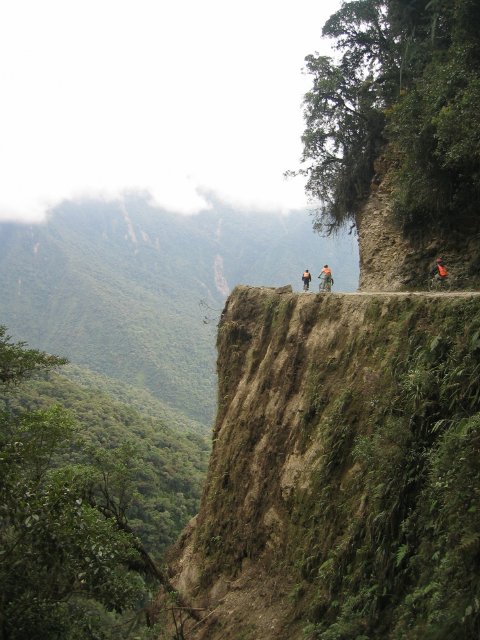
make your trip as short as possible. 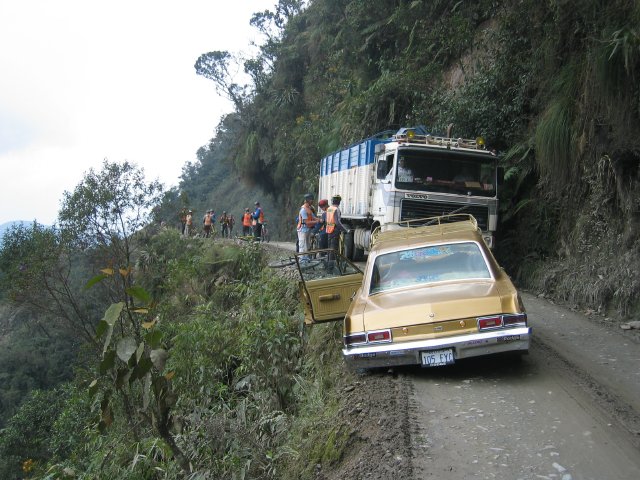 with no safety
rails. Cab drivers in the cities are just as as scary but can be
preferable to driving yourself if you don't know the streets.
Flying is safer, but it is advised if you do have to fly that you
choose the brightest colored airplane so that you are not mistaken for
a spy, or choose one that is able to stay above the ceiling for most
with no safety
rails. Cab drivers in the cities are just as as scary but can be
preferable to driving yourself if you don't know the streets.
Flying is safer, but it is advised if you do have to fly that you
choose the brightest colored airplane so that you are not mistaken for
a spy, or choose one that is able to stay above the ceiling for most 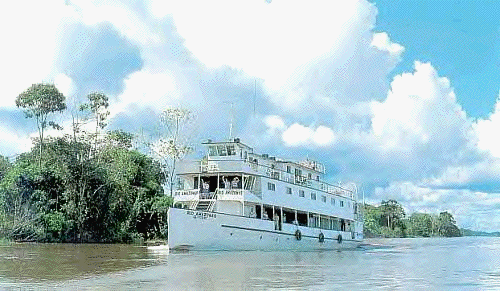 anti-aircraft
weapons. If at all possible avoid any aircraft over 20 years old,
especially Chinese or Russian. In many areas the only way to
travel is by boat, be very careful and our best advice is to know how
to swim. Trains are still widely used for long distance travel,
and are usually failry safe, though sometimes are targets for rebel or
terrorist stops, and trains often have a few or more pickpockets who
make their living from the passengers. It is easy to get lost,
always carry a compass and a map of the area, a GPS is nice, but won't
always be able to recieve a signal.
anti-aircraft
weapons. If at all possible avoid any aircraft over 20 years old,
especially Chinese or Russian. In many areas the only way to
travel is by boat, be very careful and our best advice is to know how
to swim. Trains are still widely used for long distance travel,
and are usually failry safe, though sometimes are targets for rebel or
terrorist stops, and trains often have a few or more pickpockets who
make their living from the passengers. It is easy to get lost,
always carry a compass and a map of the area, a GPS is nice, but won't
always be able to recieve a signal.


 Regardless of where
you
are in Central and South America, some basic practices should be
followed. If you are a tourist you have basically painted a target on
your chest, especially if you are Caucasian. To most of the population
there is little to no difference if you are American, Canadian or
European, you are just a white devil that eats babies and tortures old
women for fun. Be very careful. Avoid talking about politics or
religion to anyone, even if pressed, not only is it apt to start a
fight, but you never know who may be listening, and whatever you do do
not judge the religions or customs of the people you find yourself
surrounded by. Keep your beliefs and opinions to yourself, even when
asked about them, always
Regardless of where
you
are in Central and South America, some basic practices should be
followed. If you are a tourist you have basically painted a target on
your chest, especially if you are Caucasian. To most of the population
there is little to no difference if you are American, Canadian or
European, you are just a white devil that eats babies and tortures old
women for fun. Be very careful. Avoid talking about politics or
religion to anyone, even if pressed, not only is it apt to start a
fight, but you never know who may be listening, and whatever you do do
not judge the religions or customs of the people you find yourself
surrounded by. Keep your beliefs and opinions to yourself, even when
asked about them, always keep an open
mind, and smile at everyone. It
is a lot harder to rob or kill someone who is nice to you than someone
who is an asshole. Be respectful and polite, that guy you just insulted
may be the local police chiefs son, or that pretty girl whose butt you
just pinched may be the daughter of a
local Cartel head. Make yourself
aware of the local laws and don't buy illegal goods or engage in
illegal activities, while some countries like Mexico or Brazil are more
progressive than others and likely to be civilized in their
punishments, most countries in Central and South America have little
tolerance for those who break the law (such as it may be),
keep an open
mind, and smile at everyone. It
is a lot harder to rob or kill someone who is nice to you than someone
who is an asshole. Be respectful and polite, that guy you just insulted
may be the local police chiefs son, or that pretty girl whose butt you
just pinched may be the daughter of a
local Cartel head. Make yourself
aware of the local laws and don't buy illegal goods or engage in
illegal activities, while some countries like Mexico or Brazil are more
progressive than others and likely to be civilized in their
punishments, most countries in Central and South America have little
tolerance for those who break the law (such as it may be),  and a 5 year
stint in a Colombian prison hellhole is a death sentence for most. If
this happens there is very little your embassy can do about it. Always
ask permission before taking a photograph or video of anyone or
anything, never try to sneak it. Never try to take a picture of a
government installation, building or soldiers. Never affiliate
and a 5 year
stint in a Colombian prison hellhole is a death sentence for most. If
this happens there is very little your embassy can do about it. Always
ask permission before taking a photograph or video of anyone or
anything, never try to sneak it. Never try to take a picture of a
government installation, building or soldiers. Never affiliate  yourself
with anyone in conversation, not even your home country. Always know
where your embassy is, and check in as soon as you enter a country or
city that has one, and check in again when you leave. When in your
hotel always make sure your doors and windows are locked, and it is a
good idea to leave your television or radio on, especially when you
leave. It is incredibly frequent that hotel rooms get robbed even in
the finest hotels. No matter where you are keep your money,
yourself
with anyone in conversation, not even your home country. Always know
where your embassy is, and check in as soon as you enter a country or
city that has one, and check in again when you leave. When in your
hotel always make sure your doors and windows are locked, and it is a
good idea to leave your television or radio on, especially when you
leave. It is incredibly frequent that hotel rooms get robbed even in
the finest hotels. No matter where you are keep your money,  credit
cards, ID and passport hidden well, on your person, and in separate
places. Also keep money in your wallet for bribes. Wear a cheap watch
and durable but inexpensive clothing. Remember, the more money it looks
like you have the better a target you will make, although just by being
foreign you automatically will be assumed to be wealthy. Travel in
groups, never alone, and ALWAYS hire
a guide. The same goes for
drivers. The best place to get a guide or driver is either to have
someone in the country you know or trust arrange for one, or go through
your hotel. Travel as light as possible, and pay the hotel manager to
hold any expensive items. The following tips are excerpted (with slight
changes) from Fielding's
Danger Guide:
credit
cards, ID and passport hidden well, on your person, and in separate
places. Also keep money in your wallet for bribes. Wear a cheap watch
and durable but inexpensive clothing. Remember, the more money it looks
like you have the better a target you will make, although just by being
foreign you automatically will be assumed to be wealthy. Travel in
groups, never alone, and ALWAYS hire
a guide. The same goes for
drivers. The best place to get a guide or driver is either to have
someone in the country you know or trust arrange for one, or go through
your hotel. Travel as light as possible, and pay the hotel manager to
hold any expensive items. The following tips are excerpted (with slight
changes) from Fielding's
Danger Guide:


HOW TO SURVIVE BEING A WESTERN DEVIL |
| Whether
you accept
it or not, if you are of European extraction, or were raised on T-bones
and Pepsis or even wear Eddie Bauer gear, you will be taken for a Yank,
Russian, or Euro in most of Central and South America.
Even the African-American traveler finds himself being simply a rich American when he looks for his roots in black Africa. In all cases, understand that along with your American Tourister luggage and Nikes, you carry a different kind of baggage. About 200 years of imperialism, covert action, warfare, occupation and political interference. Also a large part of the world just resents the fact that you are so damned affluent and healthy, and they're not. You may not have bombed Nicaragua, smart-bombed innocent Colombian children, overthrown every Central American dictator, or cut down the rain forests to grow cows for your Big Macs, but the chances are good you will be blamed for it. |
|
|
|
|
|
|
|
HOW TO SURVIVE WAR ZONES |
| Remember that small wars are not a carefully planned or predictable activity. More importantly, land mines, shells, stray bullets and booby traps have no political affiliation or mercy. Keep the following in mind. |
|
|
|
|
|
|
|
|
|
|
|
|
|
|
|
|
|
|
HOW TO SURVIVE REVOLUTIONARY PLACES |
| Although no one can predict a sudden change in government, there are some things that could keep you from appearing on CNN wearing a blindfold. |
|
|
|
|
|
|
|
|
|
HOW TO SURVIVE BRUTAL DICTATORSHIPS |
| Ever want to see Killing Fields Part 2? How about Colombia. What about watching live executions on Friday Night Live? Go to Bolivia or Haiti. You haven't traveled until you've been to the world's last "It's my party and I'll rule if I want to" countries. Here are a few tips to keep you safe: |
|
|
|
|
|
|
|
|
HOW TO SURVIVE NASTY PLACES |
| Many tourists are surprised to find themselves victims of attack and extortion in "recovering" regions where tour prices are low and the crowds at the temples are slim. Be aware that banditry is a very real danger in most of Central and South America. Corruption (this assumes that there was a noncorrupt infrastructure to begin with) can range from ticket clerks mooching spare change to soldiers threatening to lift all of your possessions at military checkpoints. |
|
|
|
|
|
|
|
|
|
|
HOW TO SURVIVE MINIBUSES |
| There is a reason for the multitude of religious symbols, slogans and prayers painted on Third World buses. Once they cram their doors shut and the wobbly wheels start forward, your life is in the hands of a supreme being. If you travel via small buses, remember the following: |
|
|
|
|
|
|
|
|
HOW TO SURVIVE TAXIS |
|
|
|
|
|
|
|
|
|
HOW TO SURVIVE AUTOMOBILES |
| There is little to be said that hasn't been said in every driver's education class. Speed, booze, bad roads, and other drivers kill. Driving in the Third World is not safe, so if possible check out the local Hertz Rent-A-Yak. |
|
|
|
|
|
|
|
|
HOW TO SURVIVE BOATS |
| It is hard to provide general safety tips considering the wide range of waterborne craft travelers can take. Large cruise ships have very different safety problems when compared to pirogues. Here is a starting list. |
|
|
|
|
|
|
|
|
|
|
HOW TO SURVIVE FLYING |
| Despite all the unnerving statistics, if you have a choice of transportation when traveling long distances, jump on a plane. Yes, it is dangerous but not as dangerous as enduring the kaleidoscope of misery and misfortune that awaits you on the ground. |
|
|
|
|
|
|
|
|
|
|
|
|
HOW TO SURVIVE TRAINS |
|
|
|
|
|
|
TIPS ON SURVIVING BUSINESS TRAVEL |
|
|
|
|
|
|
|
|
|
|
|
|
|
|
|
|
|
(Written by Deric "D" Bernier, and excerpted without permission from Fielding's Danger Finder.)