 the elephants, giraffes, rhinoceros, and hippopotami. Its grasslands
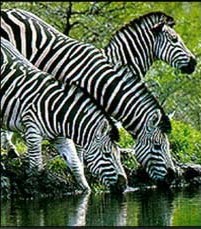
are the grazing grounds of a variety of herd animals such as the beautiful
zebra and several species of deer and antelope, to the haggard looking
water buffalo species. Hyena and vultures scan the horizon for carrion,
and warthogs move through the underbrush looking for whatever they can
find. Along the rivers crocodiles move
the elephants, giraffes, rhinoceros, and hippopotami. Its grasslands
are the grazing grounds of a variety of herd animals such as the beautiful
zebra and several species of deer and antelope, to the haggard looking
water buffalo species. Hyena and vultures scan the horizon for carrion,
and warthogs move through the underbrush looking for whatever they can
find. Along the rivers crocodiles move  through
the water silently hunting. Snakes and other reptiles are found throughout
the land. In the dense jungle gorillas and chimpanzees roam through
the bush. Baboons move in packs across the grasslands and savannas.
Monkeys of all shapes and sizes are found throughout the continent.
Exotic birds as well are found in abundance, in a multitude of species.
Fish fill the waterways. And insects of innumerable variety are found
in Africa. For the sake of convenience, space, and roleplaying we
will only focus on those animal that might prove dangerous.
through
the water silently hunting. Snakes and other reptiles are found throughout
the land. In the dense jungle gorillas and chimpanzees roam through
the bush. Baboons move in packs across the grasslands and savannas.
Monkeys of all shapes and sizes are found throughout the continent.
Exotic birds as well are found in abundance, in a multitude of species.
Fish fill the waterways. And insects of innumerable variety are found
in Africa. For the sake of convenience, space, and roleplaying we
will only focus on those animal that might prove dangerous.

BIG
CATS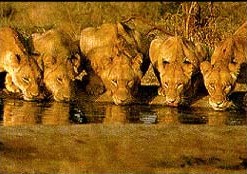
The
lion is the largest and most bountiful of the large cats in Africa, and
perhaps the most dangerous. They are found throughout the country,
except to the deserts of the 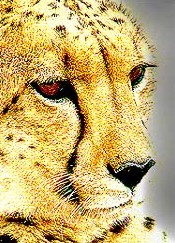 north.
Cheetahs are the fastest land creature in the world, and are found primarily
on the grasslands and savannas of Africa where they can make use of their
incredible speed to hunt. Leopards and panthers, like the lion, are
found throughout Africa, in the dense jungles as well as the wide open
grasslands.
north.
Cheetahs are the fastest land creature in the world, and are found primarily
on the grasslands and savannas of Africa where they can make use of their
incredible speed to hunt. Leopards and panthers, like the lion, are
found throughout Africa, in the dense jungles as well as the wide open
grasslands. 
In most cases large cats will avoid humans, however the smell of blood will attract their curiosity. If a large cat has been wounded, or frightened it will become very aggressive, and even more so if it is protecting its young.
ELEPHANTS
Elephants
are usually not a threat, many tribes use them for labor, some use them
for transportation. The elephant is most often scene as a gentle
giant, this is not always true. An enraged elephant, especially a
bull is almost unstoppable. Its massive size and weight, its tremendous
charging speed, and its large tusks can do tremendous amounts of damage.
RHINOCEROS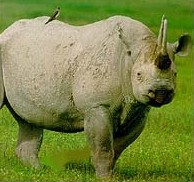
A
rhino is more aggressive than the elephant, and much faster. Most
often if left alone they pose no threat, but they have been known to attack
for no apparent reason. There are numerous accounts of Rhinoceros
attacks on moving vehicles, charging them again and again. Fire also
attracts them, and a myth proliferates that if a rhinoceros smells or sees
a fire it will charge a camp and stomp out the fire to put it out.
HIPPOPOTAMI
Hippos
are quite possibly the most dangerous animal in Africa, and they carry
the largest death toll of any mammal on the continent. They have
a misguided reputation of being gentle, when in reality they are the most
aggressive animal to be found. Their enormous bodies contain great
power, and their huge powerful jaws can crush bone easily. They are
most deadly in the water, and are known to attack and capsize small boats.
If you are caught in a hippos jaws in the water it will drag you to the
bottom and hold you there until you drown. When traveling by river
always be very cautious of hippopotami, especially at night.
APES
The
largest of the apes is the mountain gorilla, found in the jungle highlands.
Like its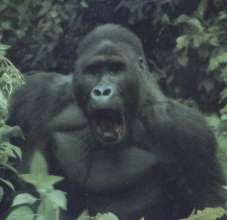 slightly
smaller cousin the lowland gorilla, most will not attack unless provoked.
However if the animal feels you are a threat he will charge. An enraged
gorillas powerful arms and amazing agility and ferocity make it very dangerous
indeed. Like humans a gorillas mood is a hard thing to judge, but
unless you are threatening its young, or invading its territory they are
fairly docile. Chimpanzees however can be very aggressive, and while
only the adults are generally large enough to be considered dangerous caution
should be taken. An adult chimpanzee is at least as large as a man,
and several times stronger. Their are tribes of chimps that are documented
carnivores and they hunt in organized parties. Although they usually
only eat smaller monkeys and occasionally other trespassing chimps even
the meat eating chimps have a primarily vegetarian diet. Where gorillas
and chimpanzees stick pretty much to the lush dense jungles the baboon
operates on the wide open grasslands and savannas, and is sometimes seen
on the outskirts of the deserts as well. Baboons are partial to fruit,
but they also eat meat, and while attacks on humans are rare they do occasionally
occur. Attacks on humans generally only occur when the animal is
provoked, however during times of extreme drought they have been documented
to attack and kill humans without cause. Baboons move and hunt in
large packs.
slightly
smaller cousin the lowland gorilla, most will not attack unless provoked.
However if the animal feels you are a threat he will charge. An enraged
gorillas powerful arms and amazing agility and ferocity make it very dangerous
indeed. Like humans a gorillas mood is a hard thing to judge, but
unless you are threatening its young, or invading its territory they are
fairly docile. Chimpanzees however can be very aggressive, and while
only the adults are generally large enough to be considered dangerous caution
should be taken. An adult chimpanzee is at least as large as a man,
and several times stronger. Their are tribes of chimps that are documented
carnivores and they hunt in organized parties. Although they usually
only eat smaller monkeys and occasionally other trespassing chimps even
the meat eating chimps have a primarily vegetarian diet. Where gorillas
and chimpanzees stick pretty much to the lush dense jungles the baboon
operates on the wide open grasslands and savannas, and is sometimes seen
on the outskirts of the deserts as well. Baboons are partial to fruit,
but they also eat meat, and while attacks on humans are rare they do occasionally
occur. Attacks on humans generally only occur when the animal is
provoked, however during times of extreme drought they have been documented
to attack and kill humans without cause. Baboons move and hunt in
large packs.
REPTILES
Africa
is home to some of the most venomous snakes on earth, including both green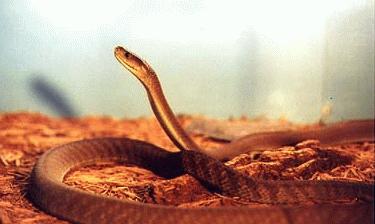 and black mambas, the puff adder and its cousin the death adder, the gabon
viper, several species of cobra and asp, and many others. While conservationists
will emphasize again and again that these snakes will leave you alone if
you leave them alone, the simple reality is that in most cases you will
not be aware of the snake it already feels you have threatened it, and
by then it is too late. Some species, like the mamba are even overly
aggressive and will attack and even chase a human. In any case a
bite from a venomous snake in Africa will usually
and black mambas, the puff adder and its cousin the death adder, the gabon
viper, several species of cobra and asp, and many others. While conservationists
will emphasize again and again that these snakes will leave you alone if
you leave them alone, the simple reality is that in most cases you will
not be aware of the snake it already feels you have threatened it, and
by then it is too late. Some species, like the mamba are even overly
aggressive and will attack and even chase a human. In any case a
bite from a venomous snake in Africa will usually  result
in death, as appropriate medical care is usually too far away, and carrying
antivenin for every snake that might be encountered is impossible.
Exercise extreme caution around snakes. Of course there are more
non venomous snakes than there are venomous, including several large species
of python. Another dangerous reptile in Africa is the crocodile,
found mostly along the Nile river in Egypt. While the crocodile is
not generally viewed as a major threat they have been known to attack swimmers
and bathers.
result
in death, as appropriate medical care is usually too far away, and carrying
antivenin for every snake that might be encountered is impossible.
Exercise extreme caution around snakes. Of course there are more
non venomous snakes than there are venomous, including several large species
of python. Another dangerous reptile in Africa is the crocodile,
found mostly along the Nile river in Egypt. While the crocodile is
not generally viewed as a major threat they have been known to attack swimmers
and bathers.
INSECTS
Most
insects are harmless, however the number one and two killers in Africa
belong to the insect kingdom. The mosquito, which carries malaria
and other diseases has killed more people in africa than any other creature,
it is strongly advised that travelers use insect repellent. The second
deadliest creature is the Tsetse fly, whose bite carries trypanosomiasis.
The tsetse fly is found in the tropical areas of Africa. Rhodesian
Trypanosomiasis is a lethal disease, symptoms begin about two weeks after
the bite when an inflammation of the skin appears at the site of the bite.
Fever develops soon after, accompanied by rashes, enlarged and painful
lymph nodes, and anemia. Later mental depression, tremors in the
arms and legs, loss of hunger, slurred speech, and increasing amounts of
sleep to such a point that in the end periods the person is almost always
sleeping. Then death occurs. Gambian Trypanosomiasis starts
6 month to years after the initial bite and develops very slowly, often
making it harder to diagnose. Drugs used to treat the disease are
highly toxic and must be administered with caution. If the disease
is caught early the chances for survival are good, however if untreated
or if treatment is started late irreversible brain damage and death is
common. In to these insects, the African killer bee is to be avoided
at all costs, and the african fire ant has killed as well. While
not insects per se, there are several venomous spiders and scorpions in
Africa as well.

Written by Deric "D" Bernier.