TRAVELING
IN AFRICA
 Africa
has some of the richest history and oldest cultures in the
Africa
has some of the richest history and oldest cultures in the world, and the only way to see them is to travel.
From the
world, and the only way to see them is to travel.
From the  Pyramids
of Egypt, to the mosques of Morocco. From the beautiful
nights in the
deserts
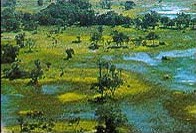
to the lush green jungles. Wildlife, art, people,
and landscapes
make Africa a wonderful
Pyramids
of Egypt, to the mosques of Morocco. From the beautiful
nights in the
deserts
to the lush green jungles. Wildlife, art, people,
and landscapes
make Africa a wonderful place to take in all the earth has to offer. The
wonder of Africa
however is deceiving, as just underneath the fantastic
beauty lies
danger
beyond imagine.
place to take in all the earth has to offer. The
wonder of Africa
however is deceiving, as just underneath the fantastic
beauty lies
danger
beyond imagine.
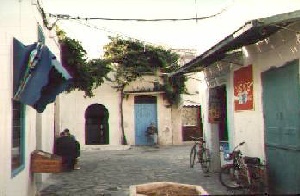 No
matter where you are in Africa, traveling is
dangerous. In the
cities
you must constantly be on the lookout for pickpockets,
muggers,
religious
zealots, thieves, rapists, corrupt police and military,
beggars,
kidnappers
and
No
matter where you are in Africa, traveling is
dangerous. In the
cities
you must constantly be on the lookout for pickpockets,
muggers,
religious
zealots, thieves, rapists, corrupt police and military,
beggars,
kidnappers
and con
men. Your restaurant or hotel might be bombed
(regardless of how
nice it is), your car might be carjacked, or you might
killed for
winking
at that pretty girl. Disease is the number one killer, and
getting
malaria
or dysentery could very well be the death of you.
Prostitutes
carry
all sorts of diseases as well, and the
con
men. Your restaurant or hotel might be bombed
(regardless of how
nice it is), your car might be carjacked, or you might
killed for
winking
at that pretty girl. Disease is the number one killer, and
getting
malaria
or dysentery could very well be the death of you.
Prostitutes
carry
all sorts of diseases as well, and the 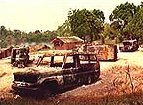 drinking
water is often contaminated. Its no better outside
the cities, as
land mines are still frequent in many areas from past and
current
conflicts.
Roads deeper in
drinking
water is often contaminated. Its no better outside
the cities, as
land mines are still frequent in many areas from past and
current
conflicts.
Roads deeper in the bush are barely there and more often than not in the
case of jungle
roads they are overgrown single lane trails. Corrupt
and greedy
military
and police checkpoints are frequent, as well are bandits
and
rebels.
Most civilian cars don't have headlights so traveling at
night is
especially
risky, especially since the owners of those cars see
the bush are barely there and more often than not in the
case of jungle
roads they are overgrown single lane trails. Corrupt
and greedy
military
and police checkpoints are frequent, as well are bandits
and
rebels.
Most civilian cars don't have headlights so traveling at
night is
especially
risky, especially since the owners of those cars see  no
problem zipping around after dark. In the desert if
you get stuck
or stranded without a vehicle it is very possible you will
die from
dehydration
and thirst before you ever see another vehicle, much less
get it to
stop
for you. In
no
problem zipping around after dark. In the desert if
you get stuck
or stranded without a vehicle it is very possible you will
die from
dehydration
and thirst before you ever see another vehicle, much less
get it to
stop
for you. In  the
jungle water is not as hard to find, however the animals,
rebels and
tribal
warriors may be much harder to deal with. Bridges
are often
nothing
more than a few logs, if
the
jungle water is not as hard to find, however the animals,
rebels and
tribal
warriors may be much harder to deal with. Bridges
are often
nothing
more than a few logs, if  that.
And
there are several large animals that are known to attack
vehicles,
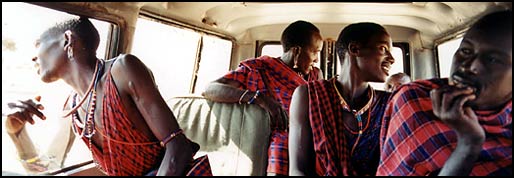
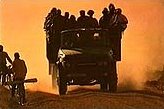
such as rhino's and hippo's. Traveling by bus is
just as risky,
especially
since like the cars the buses often don't have headlights,
and often
the
bus will be falling apart, and powered by an engine much
to small to
be
that.
And
there are several large animals that are known to attack
vehicles,
such as rhino's and hippo's. Traveling by bus is
just as risky,
especially
since like the cars the buses often don't have headlights,
and often
the
bus will be falling apart, and powered by an engine much
to small to
be 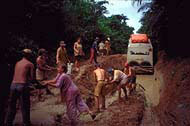 hauling
around the weight of a busload of people (Often as engines
wear out
they
will be replaced by the first engine they can find, these
usually come
out of compact cars
hauling
around the weight of a busload of people (Often as engines
wear out
they
will be replaced by the first engine they can find, these
usually come
out of compact cars  or
old toyota pickups). Traveling by train is not much
better, as
they
are often targets for bandits who hold up the trains
regularly, mush
like
the bandits of the american old west. Trains and
buses are also
safe
havens for pickpockets and the like who can simply get off
at the next
stop before anyone knows what's happened. For the
most part
airplanes
or
old toyota pickups). Traveling by train is not much
better, as
they
are often targets for bandits who hold up the trains
regularly, mush
like
the bandits of the american old west. Trains and
buses are also
safe
havens for pickpockets and the like who can simply get off
at the next
stop before anyone knows what's happened. For the
most part
airplanes are the safest way to travel long distances, however this
isn't saying
much. Most of the airplanes, even in the commercial
airports are
between 30 to 80 years old, are run much harder and abused
far greater
than anything you have ever seen. They are barely
holding
together.
And that isn't even the worst of the problems with air
travel in
Africa,
are the safest way to travel long distances, however this
isn't saying
much. Most of the airplanes, even in the commercial
airports are
between 30 to 80 years old, are run much harder and abused
far greater
than anything you have ever seen. They are barely
holding
together.
And that isn't even the worst of the problems with air
travel in
Africa,  the
pilots are poorly trained, and even if you manage to get a
good plane
with
a competent pilot you can still get shot down by military
or rebel
forces
from the ground with a SAM. By far walking is the
most dangerous
method of travel, as it leaves you vulnerable to everyone
and
everything.
the
pilots are poorly trained, and even if you manage to get a
good plane
with
a competent pilot you can still get shot down by military
or rebel
forces
from the ground with a SAM. By far walking is the
most dangerous
method of travel, as it leaves you vulnerable to everyone
and
everything.
If
you are a tourist in Africa, you have basically painted a target on your chest, especially if you are
Caucasian.
To most of the population of Africa there is little to no
difference if
you are American, Canadian or European, you are just a
white devil that
eats babies and tortures old women for fun. Be very
careful.
Also be very
painted a target on your chest, especially if you are
Caucasian.
To most of the population of Africa there is little to no
difference if
you are American, Canadian or European, you are just a
white devil that
eats babies and tortures old women for fun. Be very
careful.
Also be very  aware
of the cultures and customs of the areas you find yourself
traveling
in.
In many places, especially Muslim areas, showing undue
affection
towards
women, profanity, touching someone with your left hand,
and even
wearing
provocative clothing can get you killed. If you are
a woman it is
ten times worse. No matter where you are do not
aware
of the cultures and customs of the areas you find yourself
traveling
in.
In many places, especially Muslim areas, showing undue
affection
towards
women, profanity, touching someone with your left hand,
and even
wearing
provocative clothing can get you killed. If you are
a woman it is
ten times worse. No matter where you are do not discuss politics, do not talk religion (unless of course
you are a
devout
follower of the same religion as those you are talking
to), and
whatever
you do do not judge the religions or customs of the people
you find
yourself
surrounded by. Keep your beliefs and opinions to
yourself, even
when
asked about them, always keep an open mind, and smile at
everyone.
It is a lot harder to rob or kill someone
discuss politics, do not talk religion (unless of course
you are a
devout
follower of the same religion as those you are talking
to), and
whatever
you do do not judge the religions or customs of the people
you find
yourself
surrounded by. Keep your beliefs and opinions to
yourself, even
when
asked about them, always keep an open mind, and smile at
everyone.
It is a lot harder to rob or kill someone  who
is nice to you than someone who is an asshole. In
short always be
respectful. Always ask permission before taking a
photograph or
video
of anyone or anything, never try to sneak it. Never
try to take a
picture of a government installation, building or
soldiers. Never
affiliate yourself with anyone in conversation, not even
your home
who
is nice to you than someone who is an asshole. In
short always be
respectful. Always ask permission before taking a
photograph or
video
of anyone or anything, never try to sneak it. Never
try to take a
picture of a government installation, building or
soldiers. Never
affiliate yourself with anyone in conversation, not even
your home  country.
Always know where your embassy is, and check in as soon as
you enter a
country or city that has one, and check in again when you
leave.
When in your hotel always make sure your doors and windows
are locked,
and it is a good
country.
Always know where your embassy is, and check in as soon as
you enter a
country or city that has one, and check in again when you
leave.
When in your hotel always make sure your doors and windows
are locked,
and it is a good idea to
leave your television or radio on, especially
when you leave. It is incredibly frequent that hotel
rooms get
robbed
even in the finest hotels. No matter where you are
keep your
money,
credit cards, ID and passport hidden well, on your person,
and in
separate
places. Also keep money in your wallet for
bribes. Wear a
cheap
watch and
durable but inexpensive clothing. Remember, the more money
it looks
like
you have the better a target you will make, although just
by being
foreign
you automatically be assumed to be wealthy. Travel i
idea to
leave your television or radio on, especially
when you leave. It is incredibly frequent that hotel
rooms get
robbed
even in the finest hotels. No matter where you are
keep your
money,
credit cards, ID and passport hidden well, on your person,
and in
separate
places. Also keep money in your wallet for
bribes. Wear a
cheap
watch and
durable but inexpensive clothing. Remember, the more money
it looks
like
you have the better a target you will make, although just
by being
foreign
you automatically be assumed to be wealthy. Travel i n groups, never
alone, and ALWAYS hire a guide. The same goes for
drivers.
The best place to get a guide or driver is either to have
someone in
the
country you know or trust arrange for
n groups, never
alone, and ALWAYS hire a guide. The same goes for
drivers.
The best place to get a guide or driver is either to have
someone in
the
country you know or trust arrange for one, or go through your hotel. Travel as light as
possible, and
pay
the hotel manager to hold any expensive items.
Whatever you do,
don't
break any laws, and especially don't do drugs, as the
penalties for
this
may lead to life in prison
for the slightest (even imagined) infractions. If
this happens
there
is very little your embassy can do about it. The
following tips
are
excerpted (with slight changes) from Fielding's
Danger
Guide:
one, or go through your hotel. Travel as light as
possible, and
pay
the hotel manager to hold any expensive items.
Whatever you do,
don't
break any laws, and especially don't do drugs, as the
penalties for
this
may lead to life in prison
for the slightest (even imagined) infractions. If
this happens
there
is very little your embassy can do about it. The
following tips
are
excerpted (with slight changes) from Fielding's
Danger
Guide:
RANDOM
ENCOUNTER GENERATOR
HOW TO
SURVIVE BEING
A WESTERN DEVIL
|
| Whether
you
accept
it or not, if you are of European extraction, or
were raised on T-bones
and Pepsis or even wear Eddie Bauer gear, you will
be taken for a Yank,
Russian, or Euro in most of Africa.
Even the
African-American traveler
finds himself being simply a rich American when he
looks for his roots
in black Africa. In all cases, understand that
along with your American
Tourister luggage and Nikes, you carry a different
kind of baggage.
About
200 years of imperialism, covert action, warfare,
occupation and
political
interference. Also a large part of the world just
resents the fact that
you are so damned affluent and healthy, and
they're not. You may not
have
bombed Nigeria, smart-bombed innocent Congonese
children, overthrown
every
Central African dictator, shot Hutus in Rwanda or
cut down the rain
forests
to grow cows for your Big Macs, but the chances
are good you will be
blamed
for it.
|
|
- Learn or
try to use
the local language
even if only to say "thank you" and "excuse me."
Even learning the
phrase,
"I love your wonderful country," can get you a
lot farther than, "Why
the
hell don't you wogs learn to speak
American?"
|
- Dress
conservatively, stay away
from obvious American, European, or Japanese
brands and logos and do
not
wear signs of wealth (gold watches, jewelry,
expensive cameras,
etc.).
|
- Call the
local
embassy to find out
the do's and don'ts.
|
- Don't
wear American
flag pins, hand
out Uncle Sam decals or argue foreign policy.
Focus on learning rather
than expostulating.
|
- Be
compassionate,
understanding
and noncommittal about the current situation of
the country. If you are
a target of an anti-American diatribe, ask the
person to tell you what
he would do if he was President of the United
States. He will probably
be too shocked at your passive intellectual
response to stay
angry.
|
- Simple
items like
sunglasses, air-conditioned
cars and lack of language skills can create
barriers and
misunderstanding.
|
- Say hello
to
everyone you meet on
the street and in the course of your travels.
Look people straight in
the
eye and smile. Be polite, patient and helpful.
|
HOW TO
SURVIVE WAR
ZONES
|
| Remember that
small
wars are
not a carefully planned or predictable activity.
More importantly, land
mines, shells, stray bullets and booby traps have no
political
affiliation
or mercy. Keep the following in mind. |
- Contact
people who
have returned
or are currently in the hot zone. Do not trust
the representations of
rebel
or government contacts. Check it out
yourself.
|
- Avoid
politics, do
not challenge
the beliefs of your host, be firm but not
belligerent about getting
what
you need. Talking politics with soldiers is like
reading Playboy with
the
Pope. It kills time, but is probably not a
rewarding pastime.
|
- Do not
engage in
intrigue or meetings
that are not in public view. They still shoot
spies. Do accept any
invitations
for dinner, tea or social activities. Getting to
know your hosts is
important.
Do not gossip or lie.
|
- Travel
only under
the permission
of the controlling party. In many cases you will
need multiple
permission
from officers, politicians and the regional
commander.
|
- Remember
that a
letter of safe passage
from a freedom group presented to an army check
point could be your
death
warrant. Understand and learn the zones of
control and protocol for
changing
sides during active hostilities.
|
- Carry
plenty of
identification,
articles, letters of recommendation and
character references. It may
not
keep you out of jail, but it may delay your
captors long enough to
effect
an escape.
|
- Bring
photographs of
your family,
friends, house, dog or car. Carry articles you
have written or ones
that
mention you. A photo ID is important, but even a
high school yearbook
can
provide more proof.
|
- Check in
with the
embassy, military
intelligence, local businessmen and bartenders.
Do not misrepresent
yourself,
exaggerate or tell white lies. Keep your story
simple and
consistent.
|
- Dress and
act
conservatively. Be
quietly engaging, affable and listen a lot. Your
actions will indicate
your intentions as the locals weigh their
interest in helping you. It
may
take a few days for the locals to check you out
before they offer any
assistance.
|
- Remember
that it is
very unusual
for noncombatants to be wandering around areas
of conflict. If you are
traveling make sure you have the name of a
person that you wish to see,
an end destination and a reason for passing
through.
|
- Understand
where the
front lines
are, the general rules of engagement, meet with
journalists and
photographers
(usually found at the hotel bar) to understand
the local threats.
|
- Carry a
lot of money
hidden in various
places, be ready to leave or evacuate at any
time. This means traveling
very light. Choose a place to sleep that would
be survivable in case of
a rocket or shell attack.
|
- Visit
with the local
Red Cross,
UN, Embassy and other relief workers to
understand the situation. They
are an excellent source of health information
and may be your only
ticket
out.
|
- If
warranted buy and
wear an armored
vest or flak jacket . Carry your blood type and
critical info (name,
country,
phone, local contact, allergies,) on a laminated
card or written on
your
vest. Wear a Medic-Alert bracelet.
|
- Carry a
first aid
kit with syringes,
antibiotics, IV needles, anesthetics and pain
killers as well as the
usual
medication. It might be wise to use auto inject
syringes. Discuss any
prescriptions
with your doctor in advance.
|
- Understand
and learn
the effect,
range and consequences of guns, land mines,
mortars, snipers and other
machines of war.
|
- Get life
and health
(and KRE if
relevant) insurance and don't lie. Tell them the
specific country you
will
be traveling to. Also check with the emergency
evacuation services to
see
if they can go into a war zone to pull you
out.
|
- Carry a
military
style medical manual
to aid in treating field wounds. Take a first
aid class and understand
the effects and treatment of bullet wounds and
other major trauma.
|
HOW TO
SURVIVE
REVOLUTIONARY PLACES
|
| Although no one
can
predict
a sudden change in government, there are some things
that could keep
you
from appearing on CNN wearing a blindfold. |
- Check in
with the
embassy to understand
the current situation and to facilitate your
evacuation if needed.
Remember
that the local government will downplay the
danger posed by
revolutionary
groups.
|
- Stay away
from main
squares, the
main boulevards, government buildings,
embassies, radio stations,
military
installations, the airport, harbor, banks and
shopping centers. All are
key targets during takeovers or coups.
|
- If
trouble starts,
call or have
someone contact the embassy immediately with
your location. Stay off
the
streets, and if necessary move only in daylight
in groups. Stay in a
large
hotel with an inside room on the second or third
floor. Convert foreign
currency into Western currency if possible. Book
a flight out.
|
- Understand
the
various methods of
rapid departure. Collect flight schedules, train
information and ask
about
private hires of cars and planes. Do not travel
by land if
possible.
|
- Do not
discuss
opinions about the
former regime or the current one. Plead
ignorance while you wait to see
who wins.
|
- Keep your
money in
US dollars and
demand to pay in U.S. currency. Do not depend on
credit cards or
travelers
checks and don't be afraid to demand a discount
since who knows what
the
old money will be worth.
|
- Do not
trust the
police or army.
Remember that there will be many summary
executions, beatings and
arrests
during the first few days of a coup or
revolution.
|
- Hire a
local
driver/guide/interpreter
to travel around town and or to go out at night.
Don't be shy about
hiring
bodyguards for your residence or family.
|
- Listen
(or have your
guide listen)
to the local radio station or TV station. Have
him update you on any
developments
or street buzz. When the embassy has set up
transport make your move
with
your bodyguards or guides.
|
HOW TO
SURVIVE
FUNDAMENTALIST PLACES
|
| When traveling
to a
fundamentalist-oriented,
religiously zealous country, remember to smile, mind
your own business,
respect their customs and leave your personal
opinions at home. Some
religions
tend to be a little more tolerant of loud-mouthed,
boorish outsiders,
but
areas like Algeria are very intolerant. It's touch
and go if you are a
heathen, risky to be a Jew and better to just be a
Christian if you are
asked. |
- Muslims
are more
conservative in
rural areas and underdeveloped countries.
Despite other guidebooks'
warnings,
Muslims understand that Christians have
different customs and won't lop
your head off the first time you make a faux pas
by passing the falafel
with your left hand.
|
- Be very
careful in
the area of sexual
conduct, behavior at religious sites and
deportment with women and
religious
objects. Sexually provocative clothes, obscene
gestures, defiling the
Koran,
theft or insulting the prophet and women will
get you in trouble.
|
- Do not
proselytize,
preach or conduct
religious functions without permission of the
local government. Do not
wear religious symbols or use expressions that
use the name of Christ,
Allah, God or other religious entities.
|
- Read and
understand
the Koran and
tenants of Islam. Most Muslims will be impressed
that you have read the
Koran and if you ask them questions about their
religion.
|
- Feel free
to admit
that you are
a Christian, but express your interest in
knowing more about the Koran
and Islamic way of life. Being a "student of all
religions" is a good
cop-out
for the philosophically challenged. But beware
that students and older
men are very pleased to proselytize the word of
Allah to a potential
convert.
|
- If you
are Jewish
and traveling
in a fundamental Islamic area, your life may be
at risk by identifying
yourself as Jewish or discussing an opposing
point of view. Also
understand
there are strong feelings between Shia and Sunni
Muslim sects.
|
- Do not
squeeze hands
when shaking,
you may touch your chest after shaking hands in
the traditional Muslim
greeting. The left hand is considered unclean
because, yes, rural
Muslims
wash their nether regions with that hand.
Muslims also squat to urinate
and find the Western habit of urinating with
legs akimbo and penis
pointing,
far too theatrical for their tastes.
|
- Dress
cleanly and
conservatively,
remove your shoes in mosques and temples. Do not
point the soles of
your
feet to your host, use your right hand to eat,
greet and pass objects
around.
Expect to be kissed on both cheeks by men.
Friday is the holy day and
anything
else you need to know will be communicated to
you by your hosts or
friends.
|
- Ask
permission
before taking pictures,
do not insist or sneak photos. Do not take
photographs of women or the
infirm or elderly. Don't blow your nose in
public. Don't eat walking
around.
Don't admire objects in a host's home (he will
feel obligated to give
them
to you). Gifts are expected when visiting homes.
Do not show open
affection.
Do not show undue attention to women. The list
goes on, but don't be
paranoid,
just respectful.
|
- Read up
on the
cultures of each
region and ask permission when in doubt.
|
HOW TO
SURVIVE
BRUTAL DICTATORSHIPS
|
| Ever want to
see
Killing Fields
Part 2? How about the Congo. What about watching
live executions on
Friday
Night Live? Go to Chad or Nigeria. You haven't
traveled until you've
been
to the world's last "It's my party and I'll rule if
I want to"
countries.
Here are a few tips to keep you safe: |
- Do not
discuss
politics with anyone.
Usually there are no politics to discuss anyway.
Do not continue
conversations
started by strangers, just smile and say "No
compredo." Yes, you can be
paranoid in these places.
|
- Try not
to talk to
locals, they
will be questioned later or come under
suspicion. Use your guide to
select
charming visitors to associate with. There
really isn't much to talk
about
in these places anyway. If people stuff letters
or postcards in to your
hands, do not tell your guide or mail them
in-country. They will expect
you to mail them once outside the country.
|
- Most
autocratic
countries employ
or encourage spying on foreigners. Do not be
surprised if you are not
only
followed but your tails may even argue over who
gets to follow you. At
least you won't be mugged or pickpocketed.
|
- On the
down side,
expect to have
your room and your luggage searched while you
are out. Remember those
letters
people stuffed in your hand?
|
- Telephone
and mail
are subject to
interception and/or monitoring. Be careful what
you say. Make sure your
room is very secure when you are in it.
|
- Any
violation of the
law (imagined
or real) will result in severe penalties. There
is very little your
consulate,
lawyer or senator can do for you since you are
subject to the laws (or
lack of laws) of the country you are in. Stay
away from drugs.
|
- If you
are a
journalist, activist,
eco-activist or infomercial host you will be
considered a threat, not
only
by the local government, but in many cases by
your own. Contact the
freedom
groups listed in the back of the book to
understand what the risks are.
The concept of rights, fair trial, or fair
treatment are slim to
none.
|
- If you
are truly
concerned about
conditions in these countries, contact the Red
Cross, Amnesty
International
or Reporters Without Frontiers to see what you
can do to help. (See our
reference section in the back.)
|
HOW TO
SURVIVE NASTY
PLACES
|
| Many tourists
are
surprised
to find themselves victims of attack and extortion
in "recovering"
regions
where tour prices are low and the crowds at the
temples are slim. Be
aware
that banditry is a very real danger in most of
Africa. Corruption (this
assumes that there was a noncorrupt infrastructure
to begin with) can
range
from ticket clerks mooching spare change to soldiers
threatening to
lift
all of your possessions at military checkpoints. |
- Understand
that
bribery is normal
in many countries, but do not confuse this with
theft. Bluster,
Negotiate,
Smile, Gift or Ignore are the watchwords here.
Cheap gifts can
defuse
many situations, smiling and talking gibberish
can go a lot further
than
a "Fuck Off" and storming away.
|
- Understand
that
soldiers at checkpoints
are often hungry, sick and impoverished. They
will shoot if you don't
stop.
They can also work themselves into a frenzy if
you piss them off. Be
cool,
smile and just keep talking.
|
- Meet with
and
discuss the situation
with local embassy staff. Ask them specifically
what to do if you are
arrested,
followed or hassled. Carry their card or at
least number and address on
you while in country. Ask them for names of
military commanders,
politicians
or anybody important. Write it down. Who you
know will help. A name on
a piece of paper has more weight than just
saying the name.
|
- Stay
within
well-defined tourist
routes, lock all luggage and belongings in a
secure place. Expect and
prepare
for everything you own to be stolen.
|
- Never
travel in the
country alone.
Use a local guide to navigate check points and
police. Always hire a
driver
recommended by someone you trust.
|
- Stay
inside major
cities at major
hotels, eat at well-known, large restaurants.
Never travel or go out
late
at night. Phone ahead to tell people you are
coming over and call them
again when you arrive home safely.
|
- Fly
between cities
and pre-arrange
transportation from the airport to the
hotel.
|
- Prepare
for constant
intimidation
from police and military. Be firm about your
innocence and try to lead
them to your embassy or safe place. Find and
remember to drop the name
of a local bigwig if you are frog-marched at
gunpoint.
|
- Remember
that police
will try to
keep items removed during a search. So show them
your wallet, watch for
important papers but do not hand anything to
them. If the soldier takes
your passport into a bunker or building, walk
with him (he will wave
you
back), but insist that you have important
information for his
superior.
|
- Keep
abreast of the
political and
military situation. Keep in mind that
kidnapping, extortion and murder
are very real possibilities.
|
HOW TO
SURVIVE
MINIBUSES
|
| There is a
reason
for the multitude
of religious symbols, slogans and prayers painted on
Third World buses.
Once they cram their doors shut and the wobbly
wheels start forward,
your
life is in the hands of a supreme being. If you
travel via small buses,
remember the following: |
- Don't
travel at
night. Most Third
World minibuses make New York taxis seem
tame.
|
- Avoid
mountainous
areas and/or winter
conditions. Fly if necessary.
|
- Bring
water and food
with you, plan
for the unexpected, delays and diversions.
|
- Ask
whether the
route goes through
areas frequented by bandits or terrorist groups.
You may be surprised
to
find out who controls the countryside.
|
- Sit near
an exit or
on top. At least
make sure you are near an open window. Follow
the DP rule: Be friends
with
everyone, your seat mate might be a rebel
commander.
|
- There is
a reason
why you paid 83¢
to travel. You don't buy a lot of brake pads and
clutches with that
pocket
change.
|
- Remember
your
rooftop luggage is
prey for rummagers, slashers and thieves. Put
your luggage in a
standard
trash bag, a canvas duffle or under everyone
else's.
|
- Shirt
slashers wait
for you to doze
off and slip out your money pouches. Put your
money in your shoes if
necessary.
|
HOW TO
SURVIVE
TAXIS
|
- Choose
your cab
rather than let
them choose you.
|
- Never get
into a
taxi with another
passenger already inside.
|
- Do not
take gypsy
cabs; ask the
airline people how much it should cost to go to
your city and then
agree
upon a fare before you get in.
|
- Keep your
luggage in
the back seat,
not in the trunk.
|
- Memorize
the local
words for "no,"
"yes," "stop here" and "how much?"
|
- Have the
hotel
doorman or guide
negotiate cab fares in advance.
|
- It is a
global law
that cabbies
never carry change. Ask if the driver has change
before you hand him a
big bill.
|
- Many
cabbies will
rent themselves
out for flat fees. Do not be afraid to negotiate
the services of a
trusted
cabby as guide, chauffeur and protector of
baggage.
|
- Do not
tell cabbies
where you are
going, when you are leaving or any other
particulars that could be of
interest
to bad people.
|
HOW TO
SURVIVE
AUTOMOBILES
|
| There is little
to
be said that
hasn't been said in every driver's education class.
Speed, booze, bad
roads,
and other drivers kill. Driving in the Third World
is not safe, so if
possible
check out the local Hertz Rent-A-Yak. |
- Be
familiar with
local road warning
signs and laws.
|
- Avoid
driving
yourself if possible.
Nobody gets up in the morning and plans on
having an accident. The fact
that you are rubbernecking or checking maps
while on the wrong side of
the road dramatically increases your chances of
an accident. Flying is
safer than driving.
|
- Avoid
driving in
inclement weather
conditions, night time or especially on
weekends. Fog kills, rain
kills,
drunks kill, other tourists kill. It is
estimated that after midnight
on
Friday and Saturday nights in rural America,
three out of five drivers
on the road have been drinking. That means if
you are one of the sober
ones, pray that the other sober driver is coming
the other way.
|
- Stay off
the road in
high-risk countries.
You may think the Italians, Portuguese and
Spaniards display amazing
bravado
as they skid around winding mountain roads. The
accident rate says they
are just lousy drivers.
|
- Reduce
your speed.
To see the difference
in impact at various speeds, try running as fast
as you can into the
nearest
wall. Now walk slowly and do it again. See how
much better that
is?
|
- Wear a
seat belt,
rent bigger cars,
drive during daylight, use freeways, carry a map
and a good road guide,
etc. You're not listening are you?
|
- If you
can hire a
driver with car,
do so. Contact tour companies, embassy staff and
hotel concierges. Many
countries provide a driver when you rent a car,
so make sure you feel
comfortable
with him. Try a one-day city tour first to see
if the chemistry and his
driving skills are to your tastes.
|
- Don't
drive tired or
while suffering
from jet lag. Don't pull off to the side of the
road to nap, don't
leave
possessions in plain sight, and try to park in
lighted areas. I can see
you're not listening, so just do whatever the
hell you are going to do,
but don't say I didn't warn you.
|
HOW TO
SURVIVE BOATS
|
| It is hard to
provide general
safety tips considering the wide range of waterborne
craft travelers
can
take. Large cruise ships have very different safety
problems when
compared
to pirogues. Here is a starting list. |
- Know how
to swim, or
at least how
to float. Panic kills.
|
- Wear or
have quick
access to a life
preserver. Don't assume that the large chest
labeled "Life Preservers"
actually has usable life preservers in it.
Look.
|
- Do not
take
overcrowded boats. Charter
your own or ask when the boat will be less
crowded. Overcrowding and
rough
seas are the number one reason for sinking of
small and medium sized
ships.
|
- Avoid
travel in
rough weather, during
monsoon or hurricane season.
|
- Stay off
the water
in areas frequented
by pirates.
|
- In cold
weather
remember where the
covered life rafts are. Understand the effects
and prevention of
hypothermia.
Not a big problem for Africa, but still good
advice none the less.
|
- On large
ships pay
attention to
safety and lifeboat briefings and practice going
from your cabin to the
lifeboat station with your eyes closed.
|
- Keep a
small
carry-on or backpack
with your money, papers and minor survival gear
(water, energy bars,
hat,
compass and map). Make it waterproof and a
potential life preserver by
using one or two garbage bags as a liner.
|
- Prepare
and bring
items to prevent
seasickness, sunburn, glare and chapped
skin.
|
- Bring
binoculars,
books, coastal
maps, pens and a journal to pass away the
time.
|
HOW TO
SURVIVE FLYING
|
| Despite all the
unnerving statistics,
if you have a choice of transportation when
traveling long distances,
jump
on a plane. Yes, it is dangerous but not as
dangerous as enduring
the kaleidoscope of misery and misfortune that
awaits you on the ground. |
- Stick to
U.S.-based
carriers with
good safety records.
|
- Fly
between major
airports on nonstop
flights.
|
- Avoid bad
weather or
flying at night.
|
- You can
sit in the
back if you want
(the rear 10 rows are usually intact in case of
ground impact but the
passengers
are dead) or above the wing (you may get thrown
clear, seat and all) or
near an exit (easier egress in case of fire or
emergency landing) might
be just as advisable.
|
- Avoid
small charter
aircraft, dirt
strips and non-instrument fields.
|
- The
smaller the
plane the higher
the risk. The poorer the country, same deal
except when foreign
carriers
operate airplanes in Third World
countries.
|
- Avoid
national
carriers that are
not allowed to fly into the United States.
|
- Avoid
military cargo
flights, tagging
along on combat missions, or flying over active
combat or insurgence
areas
like Ethiopia and Zaire.
|
- Avoid
older Soviet
or Chinese-made
aircraft or helicopters.
|
- Kroll
puts out a
monthly Airport
and Airline Watch with enough hair-raising tales
of smoke filled
cabins,
blown tires, near misses and hijackings to keep
you glued firmly to the
ground. $195 per year (703) 319-8050.
|
- After all
this,
remember that travel
by airliner is the safest method of
transportation and that your odds
of
surviving a plane crash are about 50
percent.
|
- If you
are still
terrified, remember
you can buy flight insurance at 150 airports
around the U.S. You can
get
half a million dollars of insurance for $16.65
or you can spend the
same
amount on four stiff drinks. We recommend the
former, but usually end
up
doing the latter.
|
HOW TO
SURVIVE TRAINS
|
- Ask
locals whether
the train is
a target for bandits (this is appropriate
in Africa where
terrorists,
bandits and insurgents regularly target
trains).
|
- Beware of
Eastern
European train
routes where thieves are known to ride as
passengers. Sleep with the
window
cracked open to avoid being gassed.
|
- Stash
your valuables
in secret spots
making it more difficult for robbers to locate
your belongings.
|
- The back
of the
train is traditionally
the safest area in the event of a collision.
Unless, of course, your
train
is rear ended.
|
- Keep your
luggage
with you at all
times if possible. Be nice to the conductor and
he will keep an eye out
for you.
|
- Trains
are
preferable to buses or
cars when traveling through mountainous areas,
deserts and
jungles.
|
TIPS ON
SURVIVING
BUSINESS TRAVEL
|
- Con
artists wait at
airports, banks
and tourist attractions. Be affable but do not
go anywhere with your
charming
new friend.
|
- Enterprising
desk
clerks will sell
your room key to equally enterprising
prostitutes. Go straight
downstairs
until she is removed. If you stay to convince
her to leave, she may
yell
rape and then you have the local cops to pay off
as well as the desk
clerk
and the girl.
|
- Avoid
restaurants
frequented by
expats and tourists. Don't make reservations in
your own name. Do not
sit
outside.
|
- Dress in
business
attire or carry
a briefcase only when necessary. Have your
driver watch your back as
you
enter buildings or your hotel.
|
- Make
copies of
important papers,
separate your credit cards in case you lose your
wallet, keep the
numbers,
expiration dates and the phone numbers to order
replacements.
|
- Do not
show your
name, country or
hotel ID on luggage or clothing. When a clerk
asks for your room number
write it down for him.
|
- Do not
discuss
plans, accommodations,
finances or politics with strangers.
|
- Wear a
cheap watch
(or just show
the band outward). If driving, wear your watch
on the arm inside the
car.
Leave jewelry at home or in the hotel
safe.
|
- Get used
to sitting
near emergency
exits, memorize fire escape routes in the dark,
locking your doors and
being aware at all times.
|
- Kidnappers
need
prior warning, routine
schedules or tip-offs to do their dirty work.
Vary your schedule,
change
walking routes and don't be shy about changing
hotel rooms or assigned
cabs.
|
- Stay away
from the
front or back
of the plane (terrorists use these areas to
control the aircraft).
Avoid
aisle seats unless you want to volunteer for
execution.
|
- Do not
carry
unmarked prescription
drugs.
|
- Leave
questionable
reading material
at home (i.e., Playboy, political materials, or
magazines).
|
- Carry
small gifts
for customs, drivers
and other people you meet.
|
- When you
call with
your plans assume
someone is listening.
|
- Watch
your drink
being poured.
|
- Do not
hang the
"Make Up Room" sign
on your hotel room door. Rather, use the "Do Not
Disturb" sign. Keep
the
TV or radio on even when you leave. Contact
housekeeping and tell them
you don't want your room cleaned up.
|

(Written by Deric "D"
Bernier,
and excerpted without permission from Fielding's
Danger
Finder.)